
How Many Pendant Lights Should Go Over a Kitchen Island?
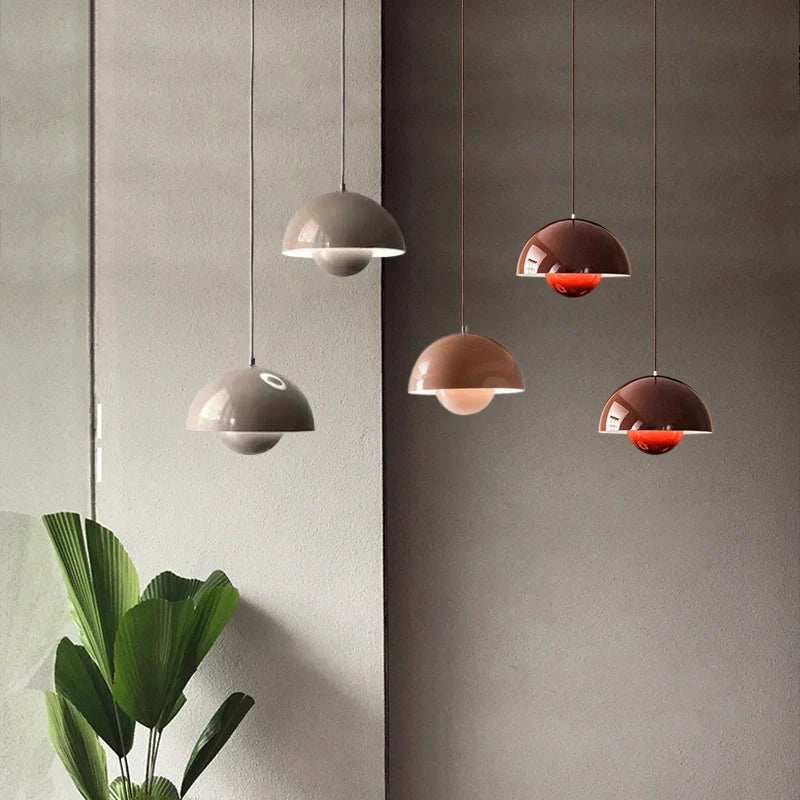
Short answer: Most kitchen islands use two or three pendant lights, but the right number depends on the island’s usable length, each shade’s diameter, and the amount of light the room already has. Start with the work surface—not the ceiling box. Two larger pendants often suit a compact or visually calm kitchen; three smaller pendants can distribute light more evenly across a longer island. A single linear fixture is often cleaner when several individual pendants would feel crowded.
Quick decision table
| Island situation | Useful starting point | Why it often works |
|---|---|---|
| Compact island, about 4–5 ft | 1 large or 2 small pendants | Keeps the ends clear and avoids visual clutter |
| Medium island, about 6–7 ft | 2 medium or 3 small pendants | Balances scale with useful task-light coverage |
| Long island, about 8–10 ft | 3 pendants or 1 linear fixture | Spreads light across more of the worktop |
| Island with a sink or cooktop | Count by work zones | Places light where prep and cleanup happen |
| Open-plan kitchen with a strong view | Fewer, larger fixtures | Preserves sightlines into the next room |
These are planning ranges, not building-code requirements. Fixture output, beam spread, ceiling height, and the island’s actual work zones can change the answer.
Use this three-step method
1. Measure the usable island length
Measure the countertop from end to end, then note any area that should remain visually open. A stool at the end, a tall faucet, a cooktop hood, or a nearby cabinet door can make part of the island unsuitable for a pendant.
2. Choose the pendant size before choosing the count
Count and diameter are connected. Three 14-inch shades occupy far more visual space than three 8-inch shades. For example, Loonglight’s Modern Metal Cone Pendant Light has a 13.7-inch diameter, while the Flowerpot Pendant Light is offered in 9.1-inch and 14.9-inch diameters. The smaller Flowerpot can support a denser row; the larger version may look calmer as a pair.
3. Check light coverage, not just symmetry
Pendants over an island usually contribute task light, but they should not be the kitchen’s only light source. Recessed or ceiling lighting and under-cabinet lighting can fill shadows. If the chosen shades focus light downward, more fixtures may create more even worktop coverage. If the fixture spreads light broadly, fewer may be enough.
When two pendants are the better choice
Choose two when the shades are medium to large, the island is roughly 6–7 feet long, or the room benefits from more negative space. Two fixtures also create a simple rhythm in open kitchens where the island faces a living or dining area.
A pair is not automatically too sparse. Mock up the shade diameters with cardboard and view them from the kitchen entrance and adjacent room. If the pair visually anchors the island and the work surface has adequate light from the full lighting plan, adding a third pendant may only add clutter.
When three pendants work better
Three smaller pendants can suit longer islands, narrow shades, and layouts with several work zones. The middle pendant creates a clear center while the outer two extend coverage toward the ends. Three also works well when the fixture has a focused downward beam.
Avoid squeezing three large shades into a short run. If the gaps look pinched or the outer shades approach the countertop ends, switch to two larger pendants or a single linear design.
When to use one linear fixture instead
A linear light can replace a row of individual pendants when you want one electrical composition, a continuous horizontal line, or fewer ceiling canopies. Loonglight’s Faretto Linear Pendant Light is offered in 40-inch and 53.5-inch lengths. The Modern Linear Glass Globe Chandelier offers 35.4-inch and 47.2-inch versions.
Compare those fixture lengths with the usable island length—not the full room. Leave comfortable visual breathing room at both ends, and confirm the drop and mounting requirements with the product page and installer.
A simple planning formula
For evenly spaced pendants, place their center points at equal intervals across the usable run. A practical layout method is:
- Mark the usable start and end points.
- Mark the center line across the island width.
- Divide the usable length into equal zones.
- Put one pendant at the center of each zone.
This method keeps the composition balanced without pretending every kitchen needs the same edge clearance. Before wiring, tape the center points to the ceiling and hang paper or cardboard templates at the planned height.
What is not suitable
- Do not choose the count from island length alone.
- Do not assume pendants will replace ambient and under-cabinet lighting.
- Do not use an indoor IP20 fixture where a damp- or wet-location rating is required.
- Do not claim a fixture is dimmable until the bulb, driver, and dimmer compatibility are confirmed.
- Do not finalize ceiling points before checking shade diameter, sightlines, and cabinet clearances.
Frequently asked questions
Is two or three pendant lights better over an island?
Two is often cleaner with larger shades; three can spread light more evenly when the fixtures are smaller or the island is longer. The best choice is the one that fits the usable island length without crowding.
Can I put two pendants over an 8-foot island?
Yes. Two larger pendants can work well over an 8-foot island if their scale and light distribution are appropriate. Three smaller pendants or one linear fixture are also valid options.
Should pendant lights be centered on the island?
Usually, the row is centered over the island’s width. Along the length, center the group over the usable work surface or the main work zones rather than blindly following the room center.
Do odd numbers always look better?
No. Three pendants create a central focal point, but two can look more architectural and open. Function, fixture size, and the room’s sightlines matter more than an “odd number” rule.
How high should kitchen island pendants hang?
A common starting range is 30–36 inches from the countertop to the bottom of the fixture. Adjust for sightlines, ceiling height, fixture design, and the people using the kitchen.
Shop the layout, not just the fixture
Start with Loonglight’s pendant lights, compare options curated for kitchen lighting, or explore linear lighting for a single-fixture alternative.