
Where Should a Living Room Chandelier Be Centered?

Center a living room chandelier on the main activity zone whenever the furniture plan and the room shell do not share the same center. In most living rooms, that means aligning the fixture with the coffee table, rug, and conversation group. Centering on the room itself works best when the layout is symmetrical. In an open plan, use the fixture to define the living zone without placing it over a walkway.
Quick Decision Guide
| Room Condition | Best Center Point | Watch For |
|---|---|---|
| Symmetrical closed room | Architectural room center | Furniture drifting away from the fixture |
| Sofa and chairs around a table | Coffee table or conversation center | Off-center rug or oversized sectional |
| Fireplace-led room | Seating zone in front of fireplace | Do not force alignment if circulation suffers |
| Open-plan room | Center of the living zone | Conflict with dining or kitchen fixtures |
| Two seating groups | One fixture per zone or a broader ceiling plan | One chandelier trying to serve both groups |

Architectural Center vs Furniture Center

The architectural center is measured from the walls. The furniture center is read from the objects people actually use. When those points differ, decide which one the eye will notice more.
If the sofa, chairs, rug, and coffee table form a strong composition, align the chandelier to that group. If the room is balanced around matching doors, windows, or built-ins and the furniture is also symmetrical, the architectural center is usually clean and convincing.
Avoid moving a ceiling box based only on a plan drawing. Stand in the doorway, sit on each sofa, and check the view toward the television or fireplace. A fixture that looks centered from above can still block an important sightline.
Use the Coffee Table Carefully
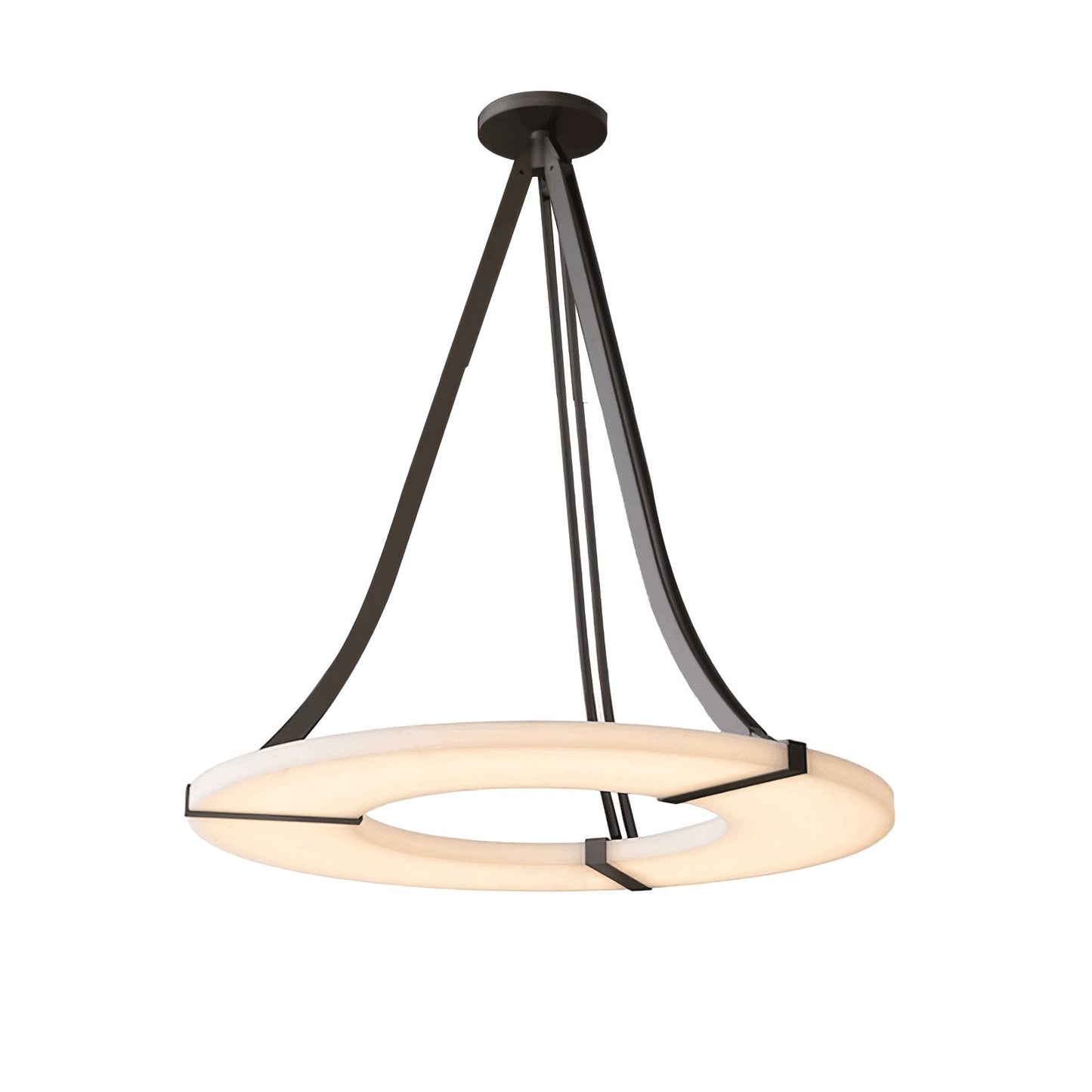
The coffee table is a helpful center marker, but only when it is genuinely central to the seating. A small side table pushed into an oversized rug is not a reliable reference. Draw or tape the table outline and proposed fixture diameter on the floor to compare their relationship.
A round fixture can reinforce a round or square conversation zone. The Alabaster Halo Pendant Light offers a circular form in listed diameters of 23.6, 31.5, and 39.4 inches. The product page lists metal and alabaster, an integrated LED source, hardwired pendant mounting, 110-240V, IP20 indoor use, and a recommended 8-20 square meter area.
Because the fixture contains natural alabaster, its veining and pattern will vary. Its listed overall body height is 19.7 or 23.6 inches depending on diameter, so confirm the final suspension length and bottom clearance for the actual ceiling.
Centering in an Open Plan

In an open living and dining room, each fixture should belong to its own zone. A living room chandelier can center on the seating group while a dining fixture centers on the table. Their centers do not need to fall on one straight line if the architecture and furniture do not support it.
What matters is hierarchy. Use related finishes, color temperatures, or visual weight so the fixtures feel coordinated. Avoid two equally dramatic fixtures competing across a short distance.
The living room lighting collection includes ceiling and portable formats that can help build this hierarchy.
When Not to Center on the Fireplace

A fireplace often anchors the room, but the chandelier does not automatically belong on its centerline. If the seating is angled, the coffee table sits elsewhere, or the fireplace shares the wall with a television, forced alignment may make the fixture feel detached from the people below.
Prioritize safe circulation and the actual conversation group. Use accent lighting to reinforce the fireplace when the ceiling fixture belongs elsewhere.
Installation and Technical Checks
Once the design center is chosen, have a qualified electrician confirm whether the ceiling box can be moved or whether a swag, track, or alternative fixture is appropriate. Verify structural support, canopy coverage, wiring route, overall drop, voltage, dimmer and driver compatibility, and local electrical requirements.
Do not assume an existing box is rated for a heavy chandelier. Do not position a low fixture in an open walking path.
FAQ
Should a chandelier always be centered over a coffee table?
No. Use the coffee table only when it represents the center of the main seating group.
Can a living room chandelier be off-center in the room?
Yes. It can be visually correct when centered on an off-center furniture zone, especially in an open plan.
Should the chandelier align with the fireplace?
Only when the fireplace and seating composition share the same center. Otherwise, support the fireplace with accent light.
What if the junction box is in the wrong place?
Ask a qualified electrician to assess relocation, structural support, wiring, and code requirements before choosing a workaround.