
Best Chandelier Shapes for Round, Square and Rectangular Dining Tables
Match the chandelier's visual direction to the table first: round or clustered fixtures suit round tables, square or evenly distributed forms suit square tables, and linear chandeliers suit rectangular or oval tables. Contrast can also work, but the chandelier should still illuminate the seating area evenly and remain visually contained within the tabletop. Table proportions, not style labels alone, should guide the final choice.
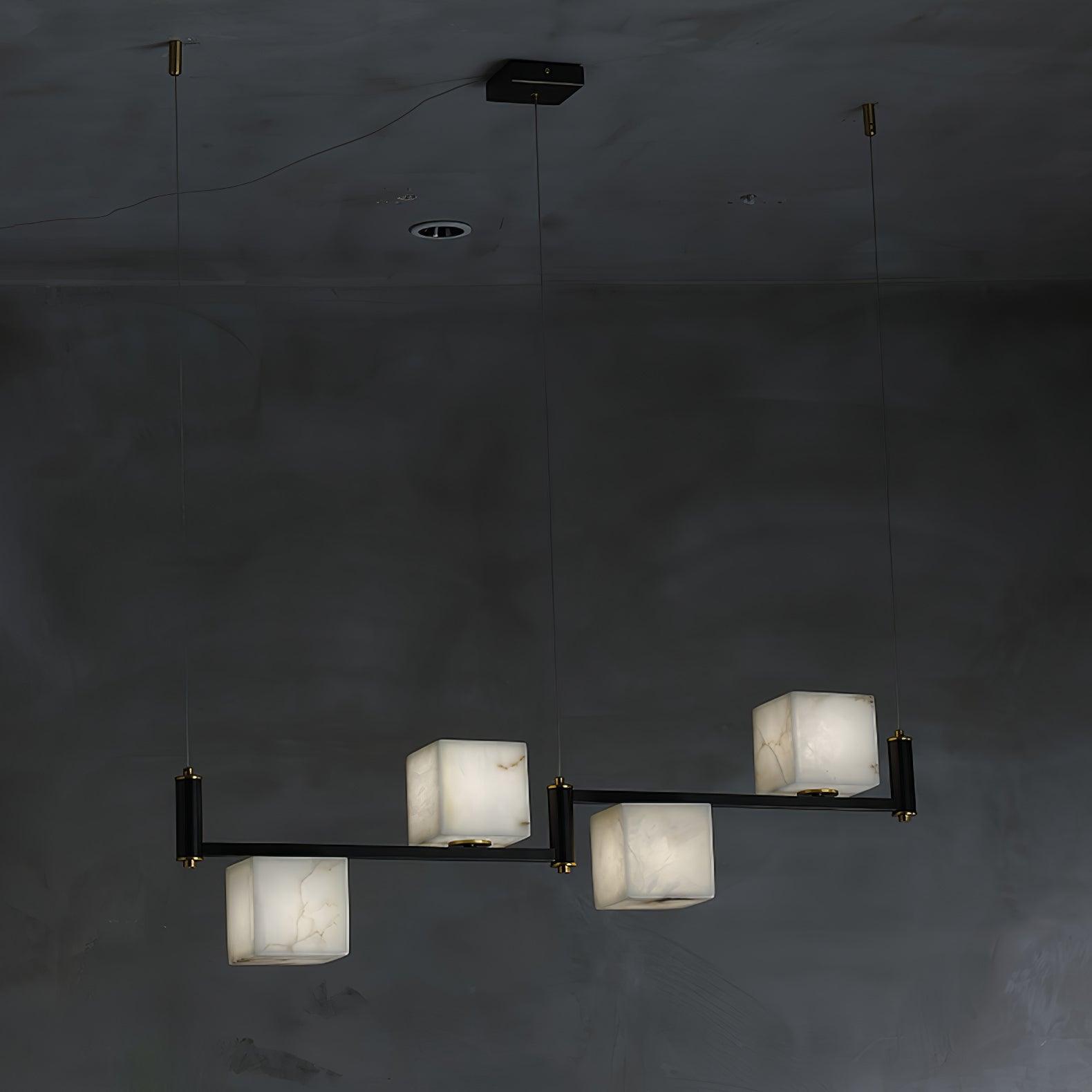
Table shape and chandelier shape at a glance
| Table shape | Easiest chandelier match | Alternative | Main risk |
|---|---|---|---|
| Round | Round, globe, clustered | Compact square | Fixture too narrow for the table |
| Square | Square, round, balanced cluster | Short linear | Uneven light at the corners |
| Rectangular | Linear, oval, branching | Two smaller fixtures | Dark table ends |
| Oval | Linear with soft edges, elongated cluster | Two round fixtures | A rigid form that fights the curve |
Round tables: keep the center strong
A round dining table naturally creates a central focal point. Round chandeliers, globe arrangements, and compact clusters reinforce that center without favoring one side.
Measure the table diameter, then compare it with the chandelier's widest dimension. Leave a visible border of tabletop around the fixture. This helps the chandelier feel connected to the table rather than suspended as a separate object.
The Orb Chandelier uses a 51.2-inch open globe composition. Its broad diameter makes it a candidate for a substantial round table or a larger dining zone, but the exact fit should be checked with a mock-up. A smaller round table may need a more compact fixture even when the room itself is large.
Square tables: repeat or soften the geometry
Square tables support two strong approaches:
- Repeat the shape with a square chandelier.
- Soften the room with a round fixture.
Repeating the square creates an architectural look and can distribute visual interest toward all four corners. The Alabaster Square Box Chandelier has square options ranging from 31.5 by 31.5 inches to 41.3 by 41.3 inches, plus narrower linear configurations. Its natural alabaster shades add softer texture to the geometric frame.
A round chandelier above a square table creates contrast and can feel less rigid. Whichever direction you choose, check that the light reaches all seats rather than concentrating only at the center.
Rectangular tables: follow the long axis
Rectangular tables are usually best served by a fixture that follows their length. A linear chandelier visually connects the two ends and reduces the chance that the center is bright while the outer place settings feel disconnected.
The Modern Linear Glass Globe Chandelier comes in 35.4-inch and 47.2-inch body sizes. The longer option can relate more naturally to an extended table, while the shorter size may fit a six-seat table or compact dining area. Compare those measurements with your actual table length before deciding.
For a very long table, two smaller chandeliers can also work. They create rhythm and allow the lighting composition to stretch without requiring one oversized object.
Oval tables: echo the curve without losing length
Oval tables combine the long axis of a rectangle with the softer ends of a circle. Good choices include:
- Linear fixtures with rounded globes.
- Elongated clusters.
- Two round pendants or chandeliers.
- Branching designs that narrow toward the ends.
A very boxy fixture can still work in a modern room, but it creates deliberate contrast. If the room already contains many hard rectangles, a globe or curved shade may produce better balance.
Shape affects light distribution
Chandelier shape is not only decorative. It also determines where the light sources sit.
A compact round chandelier may focus light near the center. A linear design spreads multiple sources along the table. A square multi-light arrangement can serve seats on all four sides. A cascading cluster may create beautiful depth but needs careful height control so that lower elements do not block conversation.
When comparing products, look beyond the outer silhouette. Check:
- Number and position of light sources.
- Shade transparency or diffusion.
- Fixture body length, width, and height.
- Suspension adjustment.
- Whether the room also has recessed, wall, or accent lighting.
When contrast is the better design choice
Exact shape matching is not mandatory. Contrast can make the dining area more distinctive:
- A round chandelier can soften a square table.
- A rectangular frame can give structure to an oval table.
- A loose globe cluster can balance a strict modern table.
Contrast works best when another feature connects the pieces. That connection might be finish color, material, repeated curves, or the alignment of the light sources.
What not to do
Avoid choosing shape from a styled photo without checking dimensions. Camera angles can make a long fixture look compact or a deep cluster look shallow.
Also avoid:
- A narrow single pendant above a long eight-seat table.
- A long linear fixture that extends close to the table ends.
- A deep cascade above a table when ceiling height is limited.
- A square fixture that is visibly rotated against the table unless that tension is intentional.
For more shape options, compare measured products in the Loonglight dining room lighting collection.
Final recommendation
Use the table's geometry as the first filter. Round tables favor central compositions, square tables favor balanced four-sided forms, and rectangular or oval tables favor elongated light distribution. Then refine the choice by width, suspension height, shade material, and the room's other light sources.
Frequently asked questions
Does a round table require a round chandelier?
No. A compact square fixture can create attractive contrast, but a round or clustered form is usually the simplest visual match.
Can I use a round chandelier over a rectangular table?
Yes, especially over a shorter table. For a long table, confirm that the outer seats receive enough light or consider two round fixtures.
What chandelier shape works over an oval table?
An elongated fixture with globes or rounded details usually echoes both the table's length and curved ends.
Should a square chandelier align exactly with a square table?
Alignment usually looks calm and architectural. A deliberate 45-degree rotation can be dramatic, but it should be mocked up before installation.
Is fixture shape more important than fixture size?
They work together. The right shape can still look wrong if it is too small, too wide, or too deep for the table and ceiling.