
How High Should Pendant Lights Hang Above a Kitchen Island?
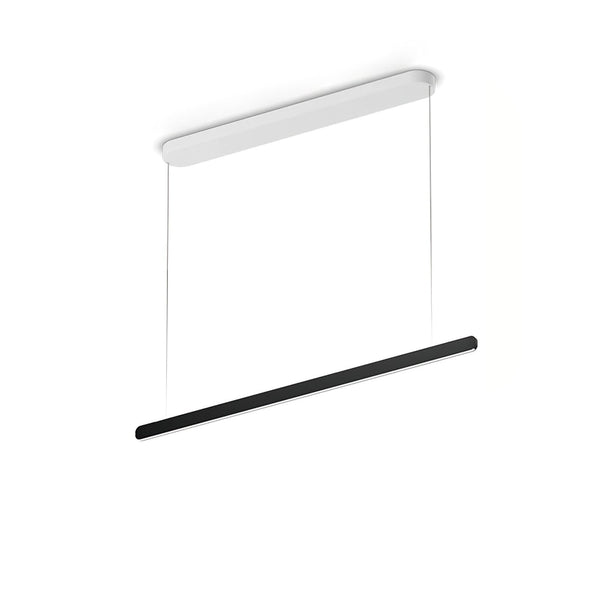
Short answer: Start with the bottom of the pendant about 30–36 inches above the kitchen island countertop. Then adjust within or near that range for the fixture’s shape, light spread, ceiling height, sightlines, and the height of the people using the kitchen. The countertop-to-fixture measurement matters more than simply measuring down from the ceiling.
Quick height guide
| Situation | Starting adjustment |
|---|---|
| Standard-height ceiling and average sightlines | Mock up 30–36 in above the counter |
| Taller ceiling | Keep task performance and sightlines primary; do not raise automatically |
| Tall household or open view | Test toward the higher end |
| Small shade with focused light | Test lower, then check glare and coverage |
| Large or visually heavy shade | Test higher, then confirm enough task light reaches the surface |
| Seating directly below | Check the view while seated and standing |
The 30–36-inch range is a widely used design starting point, not a universal code. Installation instructions and local electrical requirements take priority.
Measure from the countertop, not the ceiling
Kitchen islands can have different counter heights, and ceilings can be flat, vaulted, or sloped. Measuring from the work surface keeps the pendant relationship consistent:
- Measure vertically from the countertop.
- Mark 30, 33, and 36 inches with removable tape or a hanging string.
- Add a cardboard profile matching the fixture height and width.
- View it from the main walkways and seats.
This mock-up reveals whether the fixture blocks faces, a window, a range hood, or the view into the next room.
How ceiling height affects the decision
A high ceiling creates more empty space above the fixture, but that does not mean the pendant must hang much farther from the counter. Raising it can reduce the visual connection to the island and may spread focused task light too widely.
With tall ceilings, prioritize:
- a cord, cable, or downrod long enough to reach the intended plane;
- a canopy compatible with the ceiling;
- a fixture body large enough for the room’s vertical scale;
- a height that maintains both task light and a clear view.
For example, the Faretto Linear Pendant Light lists an overall hanging height of 70.8 inches for both its 40-inch and 53.5-inch body options. A qualified installer should confirm how that system adjusts for the actual ceiling and island.
Sightlines are the final test
Stand on both sides of the island and look across at another person. The shade should not sit directly across the most important face-to-face view. Then sit on the island stools and repeat the check.
Open shades, glass globes, shallow discs, and solid metal cones create different kinds of visual blockage. The Modern Minimalist Disc Pendant Light is only 3.9 inches high in both its 7.9-inch and 11.8-inch diameters, so its shallow profile reads differently from the 8.3-inch-high Modern Metal Cone Pendant Light.
Balance task light and glare
Lowering a pendant can concentrate light on the worktop, but it may also make the bulb or bright diffuser more visible. Raising it can open the view, but light may spread more broadly and feel weaker on the counter.
Before finalizing height, check:
- whether the bulb is visible from seated and standing positions;
- whether the shade directs light downward or diffuses it;
- whether the countertop reflects bright points;
- whether the lighting plan includes ambient and under-cabinet layers;
- whether the bulb, driver, and dimmer are compatible.
Pendant height over sinks and cooktops
A faucet can intersect the fixture visually even when there is no physical conflict. Center the overall composition carefully and test the view from the sink.
Lighting above a cooktop is more complex because a range hood, heat, grease, and appliance clearances may apply. Do not use a general pendant-height article to override appliance, ventilation, manufacturer, or code requirements. In many cooktop layouts, the hood and integrated task lighting should lead the plan.
Multi-pendant height: level or staggered?
For a straight row over an island, equal bottom heights usually look calm and make glare easier to control. Staggered heights can create a decorative cluster, but they are more suitable when the fixture family and island layout intentionally support that composition.
When using multiple pendants:
- Level the island or verify the countertop plane.
- Measure every pendant from the same surface.
- Allow for shade differences and cord settling.
- Recheck after installation before trimming adjustable cords permanently.
What is not suitable
- Do not measure only from the ceiling.
- Do not raise fixtures solely because the ceiling is tall.
- Do not let a general design range override product instructions or electrical code.
- Do not place an indoor IP20 fixture where damp or wet conditions require another rating.
- Do not finalize height without a real-size mock-up and sightline check.
Frequently asked questions
Is 30 inches too low for a kitchen island pendant?
Not necessarily. Thirty inches from the counter to the fixture bottom is a common starting point, but it must pass glare, sightline, and head-clearance checks.
Is 36 inches too high?
Not necessarily. Thirty-six inches can suit larger shades, taller users, or open sightlines, provided the work surface still receives appropriate light.
Should pendant height change with a 10-foot ceiling?
The fixture needs enough suspension length, but the counter-to-fixture relationship should still guide the final height. Test scale and task performance rather than adding height automatically.
Should all island pendants hang at the same height?
Usually yes for a straight row. Staggered heights should be an intentional cluster design, not a correction for inaccurate installation.
Can I adjust pendant height after installation?
It depends on the cord, cable, or downrod system. Confirm adjustability before purchase and before the installer cuts or fixes components.
Find fixtures that fit the drop
Browse Loonglight pendant lights, kitchen lighting, and linear lighting, then confirm the suspension range on the individual product page.